CLIMBING WALL SERVICES
4 products
Questions & Answers
FAQ ABOUT CLIMBING WALL SERVICES
We have been professionally involved in climbing since 2008 and have over time answered all kinds of questions related to different areas within the climbing sport. Please reach out if this faq does not cover the questions you might have.
Is it mandatory by law to carry out an annual safety inspection?
Yes, it is. All climbing walls built in Denmark (and throughout the EU) must meet the requirements of the climbing wall standard DS/EN 12572-1, -2, -3:2017. The annual safety inspection is described in this standard and is therefore a legally required part of the facility's operation and maintenance.
The annual safety inspection is also called a main inspection and must be carried out by a competent person with in-depth knowledge of the standard and the static capacity of structures.
There are also documentation requirements for the main inspection, which means that a report must be drawn up for each main inspection.
Remember that it is your responsibility as the owner of a climbing facility to ensure that the annual inspection is carried out and documented.
What can Gubbies help with? We carry out over 100 main inspections per year all over Denmark. Contact us if you want a non-binding offer for a service agreement where we keep track of service intervals and reporting.
What documentation requirements should I make to my climbing wall supplier?
To comply with the applicable standard DS/EN 12572-1:2017 for artificial climbing structures (ACS) and DS/EN 12572-2:2017 for bouldering structures the following documents must be available from your supplier:
- Detailed calculation of the stability of the entire structural frame and all protection points as well as the anchoring to the existing building (wall, floor, ceiling)
- Calculation and documentation of foundational works (free standing structures, towers etc.)
- Location of the protection points (ACS)
- Documentation of the impact test of the surface elements
- Documentation for testing of mounting points for climbing holds
- Report of the proof test of the ACS
- Report of the connection of modular foam safety mat elements
- Justification for the selection of the impact absorbing material used in the impact area
- Operations and maintenance manual
Furthermore all climbing facilities shall be marked in a clearly visible place with the following information: manufacturer, supplier, the number of the European Standard, the date of the installation and the date of the next main inspection.
You should always ensure that your supplier has a thorough knowledge of the climbing wall standard DS/EN 12572-1-2-3:2017. It is you as client/owner who is responsible for the facility being built legally.
When should a tensile test be performed on a climbing wall?
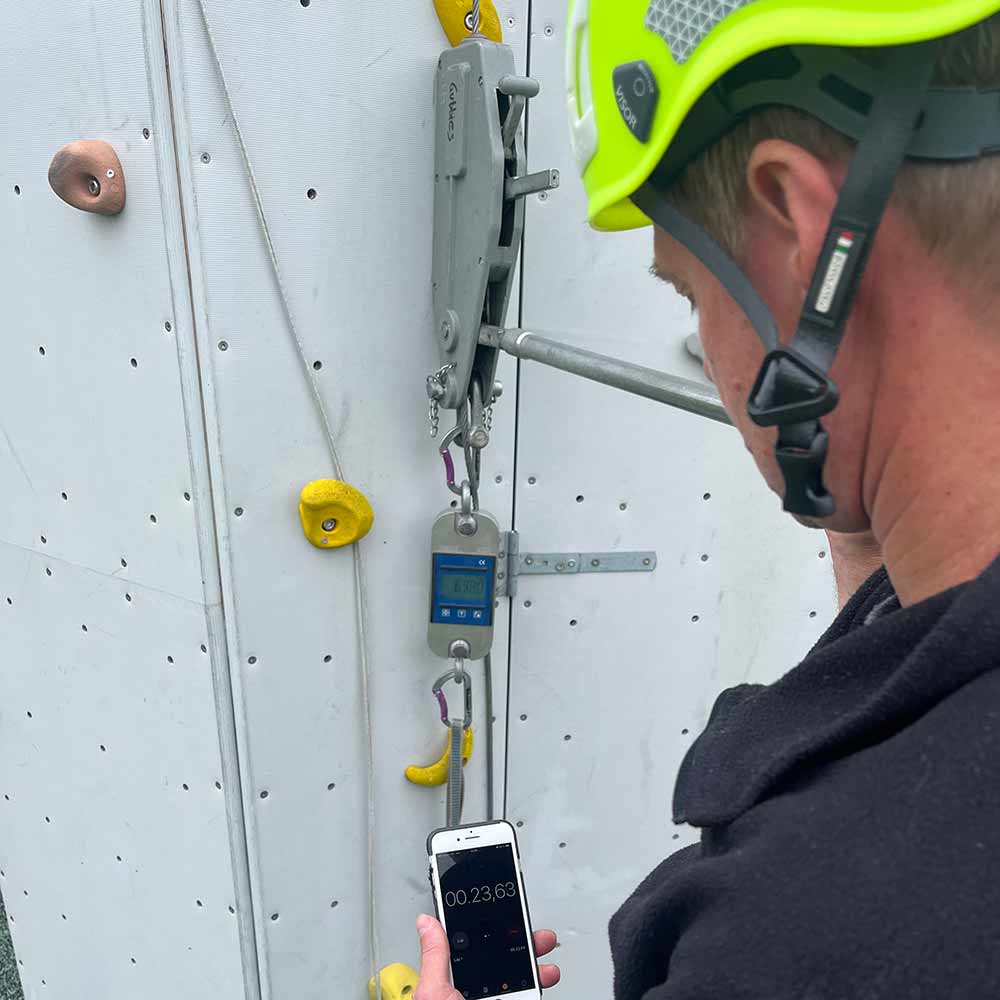
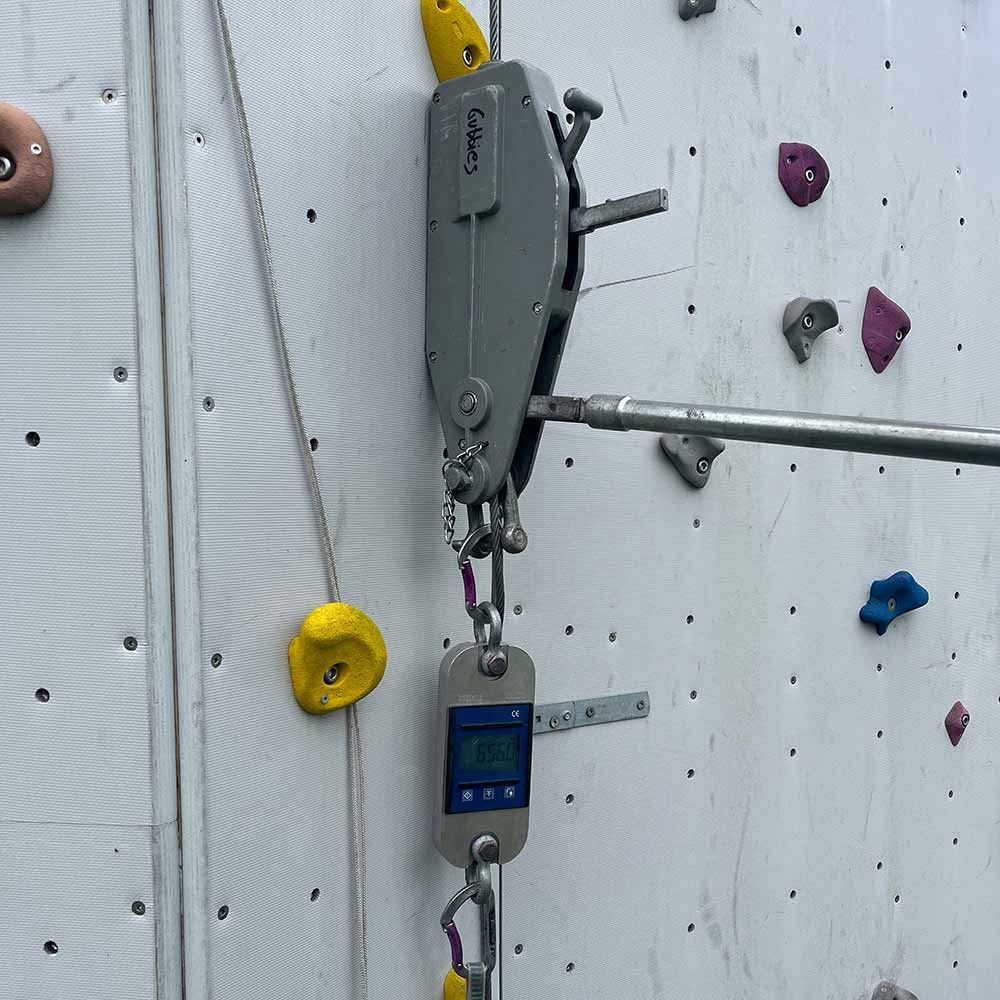
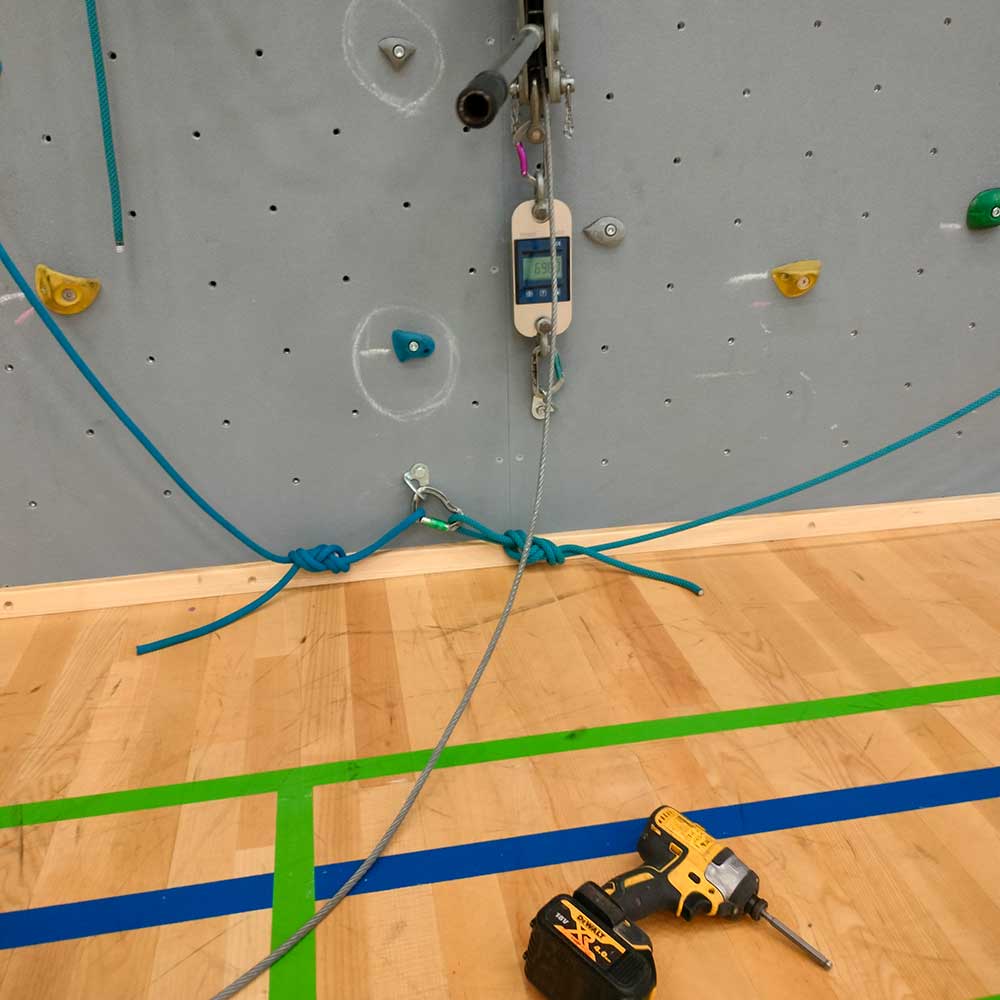
A tensile test/pull test is an important tool for assessing the structural integrity and material durability of a climbing wall. It is relevant to perform a tensile test in the following cases:
1) After Installation or Major Renovation:
When a new climbing wall is installed, or after a significant upgrade, a tensile test can verify that all connections and materials meet the required standards.
2) If There Is Suspicion of Material Fatigue or Deterioration:
If visual inspections reveal signs of cracks, peeling, or loose connections, a tensile test can provide further insight into whether the wall can still withstand the expected loads.
3) After Accidents or Extreme Loads:
In the event of unexpected incidents, such as a heavy fall or collision, hidden damage may occur. A tensile test can identify these weaknesses that might not be visible during a regular visual inspection.
4) For Outdoor Facilities Exposed to Weather Conditions:
Prolonged exposure to extreme weather—such as intense sun, rain, frost, or temperature fluctuations—can degrade the materials. A tensile test can serve as a supplement to routine inspections to ensure the wall remains capable of bearing the loads.
5) As a Supplement to Daily and Quarterly Inspections:
If doubts arise regarding the wall’s condition during routine inspections, a tensile test can be used to conduct a more precise evaluation of its structural strength.
By integrating tensile tests into the maintenance program, you can achieve a more comprehensive safety assessment that helps prevent potential issues before they develop into significant risks.
What standards do you perform safety inspections according to?
We perform the inspection according to DS/EN 12572-1/2:2017
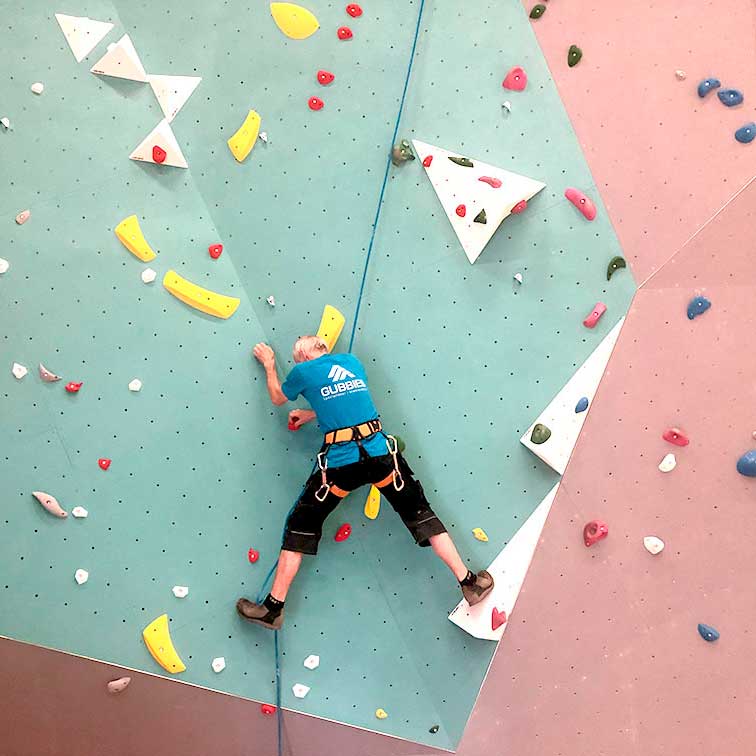
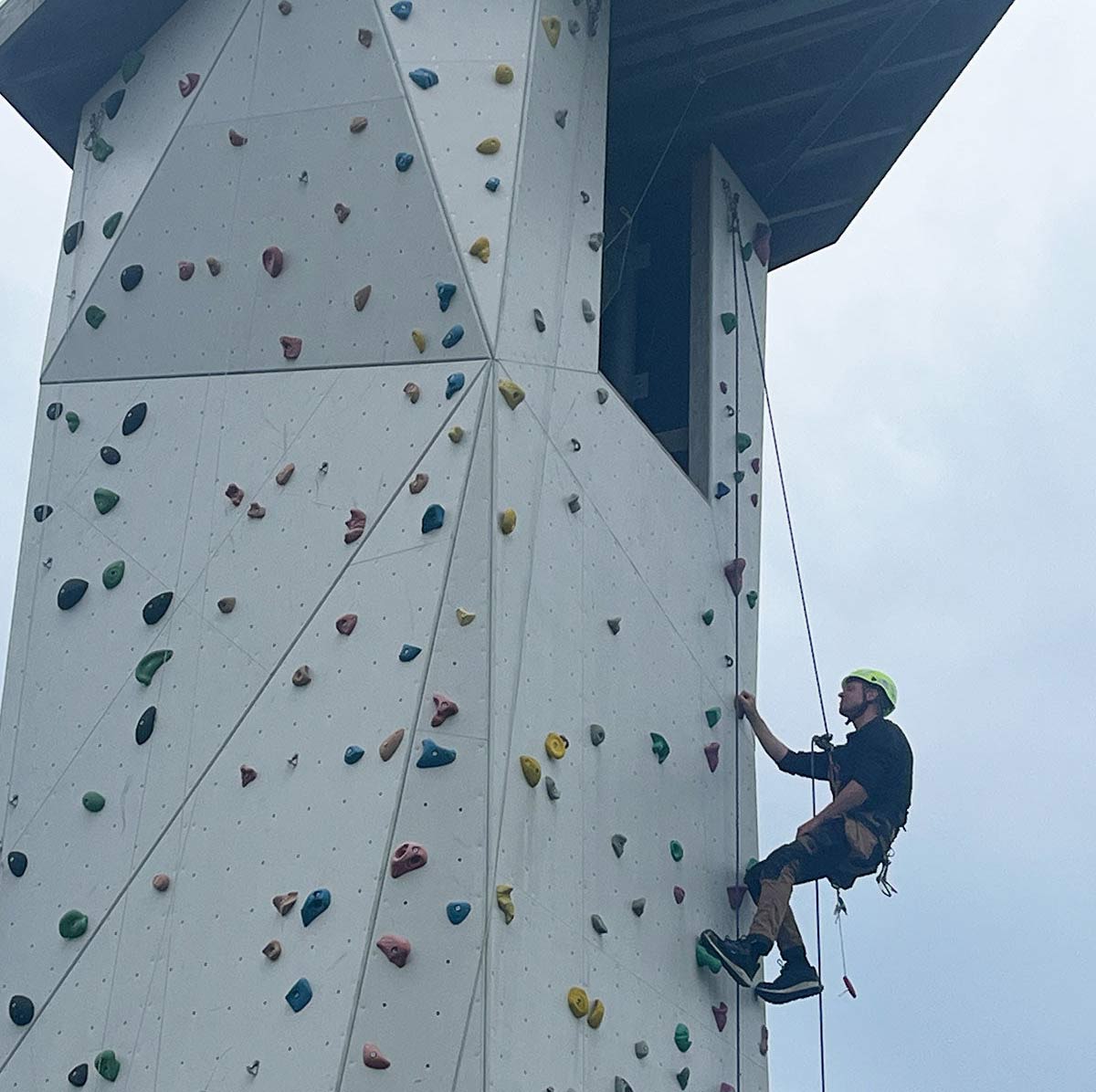
During the inspection we will review all structural elements, the fastening, the climbing holds, the safety zones and possibly your climbing equipment if this is desired. The inspection also includes pull testing protection points.
To ensure that your climbing wall meets the applicable safety standards a detailed report is prepared after the inspection, allowing you to carry out any repairs, maintenance work or improvements.
Which standards must climbing holds and the mounting of climbing holds comply with?
DS/EN 12572-3:2017 Artificial climbing walls - Part 3: Safety requirements and test methods for climbing holds.
Standard specifies the safety requirements and test methods for climbing holds. This European Standard is applicable to climbing holds, which are used for the natural progression of the climber, i.e. without the use of artificial means (e.g. ice axes, crampons, hooks, nuts) on artificial climbing structures (ACS) and bouldering walls. Climbing holds are designed to be mounted on the ACS with bolts, screws, etc. Climbing holds include large volumes or features that are designed for use without additional climbing holds being attached to them. The main fixation points for climbing holds forms part of the existing layout of the ACS and are considered in DS/EN 12572-1 and DS/EN 12572-2. This Standard is not applicable to ice climbing, dry tooling and playground equipment.
DS/EN 12572-3:2017 can be purchased here.
If you need professional advice in connection with the design, development and construction of climbing walls and climbing holds, contact us here.
What standards must a boulder wall meet?
DS/EN 12572-2:2017 Artificial climbing walls - Part 2: Safety requirements and test methods for boulder structures.
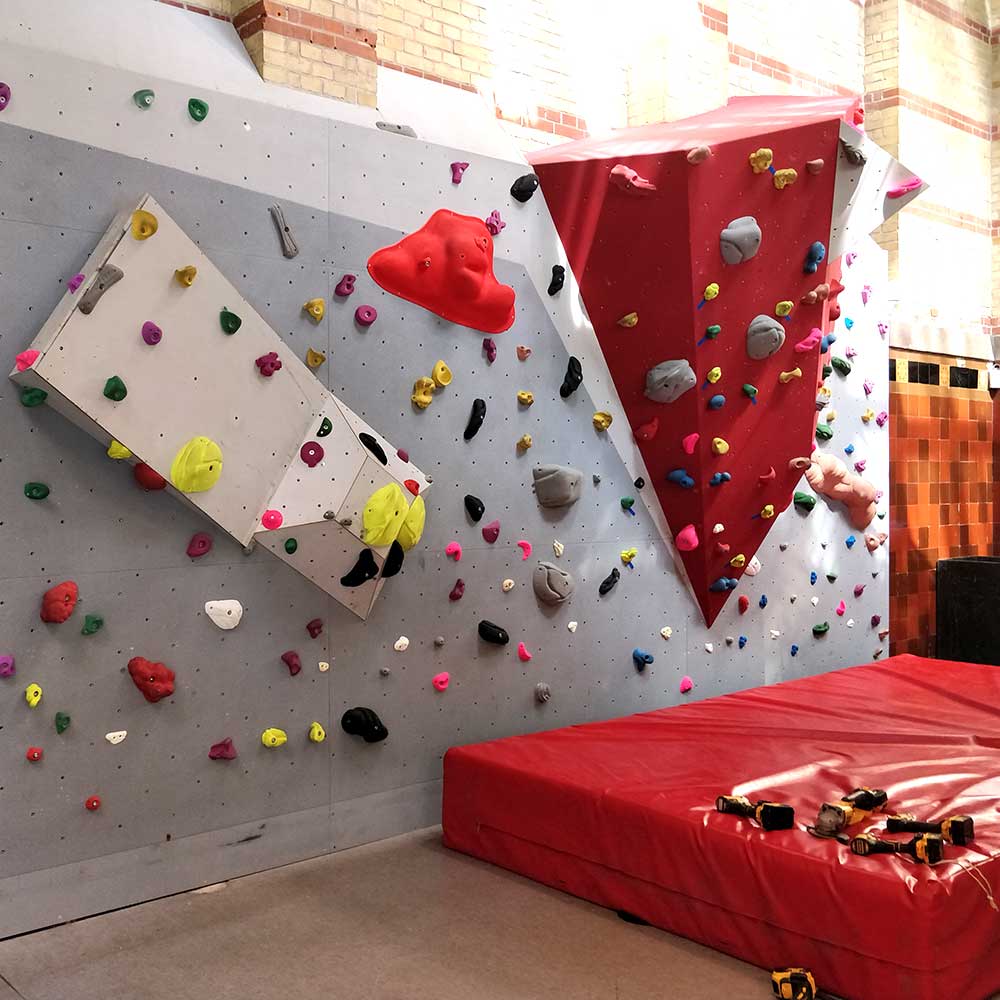
This standard specifies the safety requirements and test methods for artificial climbing walls with boulder structures. The standard also covers the safety zone (requirements for fall surfaces). The standard applies to bouldering walls when they are used for normal bouldering. It does not apply to ice climbing, dry tooling climbing or playground equipment.
Can be acquired here.
If you need professional advice in connection with the design, development and construction of climbing walls, contact us here.
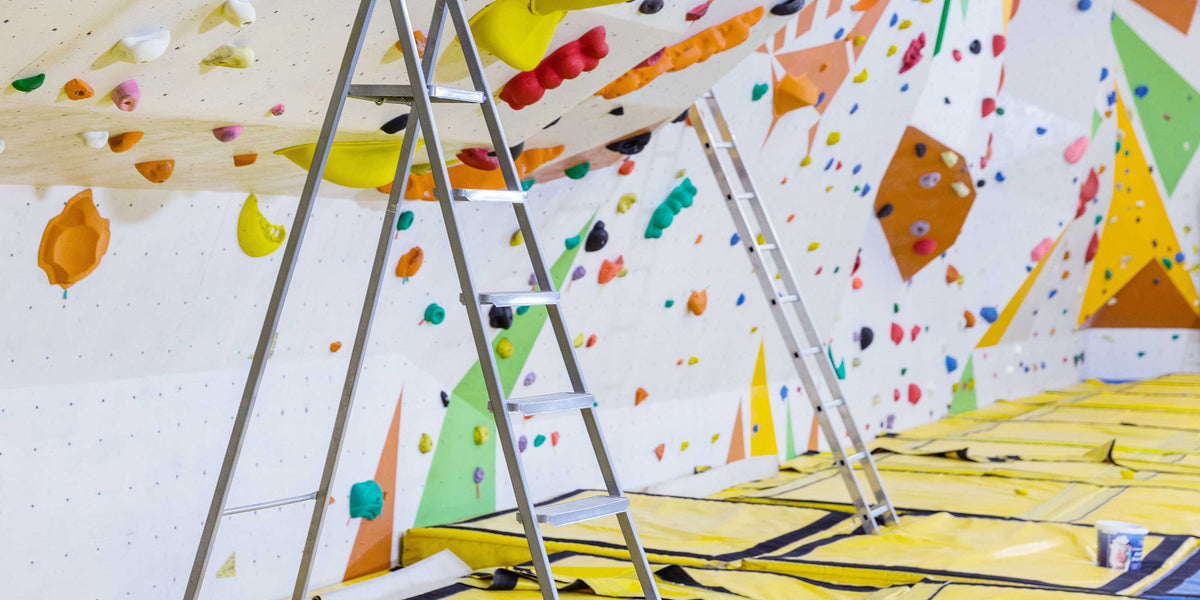
What standards must a climbing wall meet?
DS/EN 12572-1:2017 Artificial climbing walls - Part 1: Safety requirements and test methods for artificial climbing walls with protection points.
This standard specifies the safety requirements and test methods for artificial climbing structures/climbing walls with protection points. The standard applies to artificial climbing walls with protection points in normal use for sport climbing. It does not apply to ice climbing, dry tooling and playground equipment.
DS/EN 12572-1:2017 can be purchased here.
If you need professional advice in connection with the design, development and construction of climbing walls, contact us here.
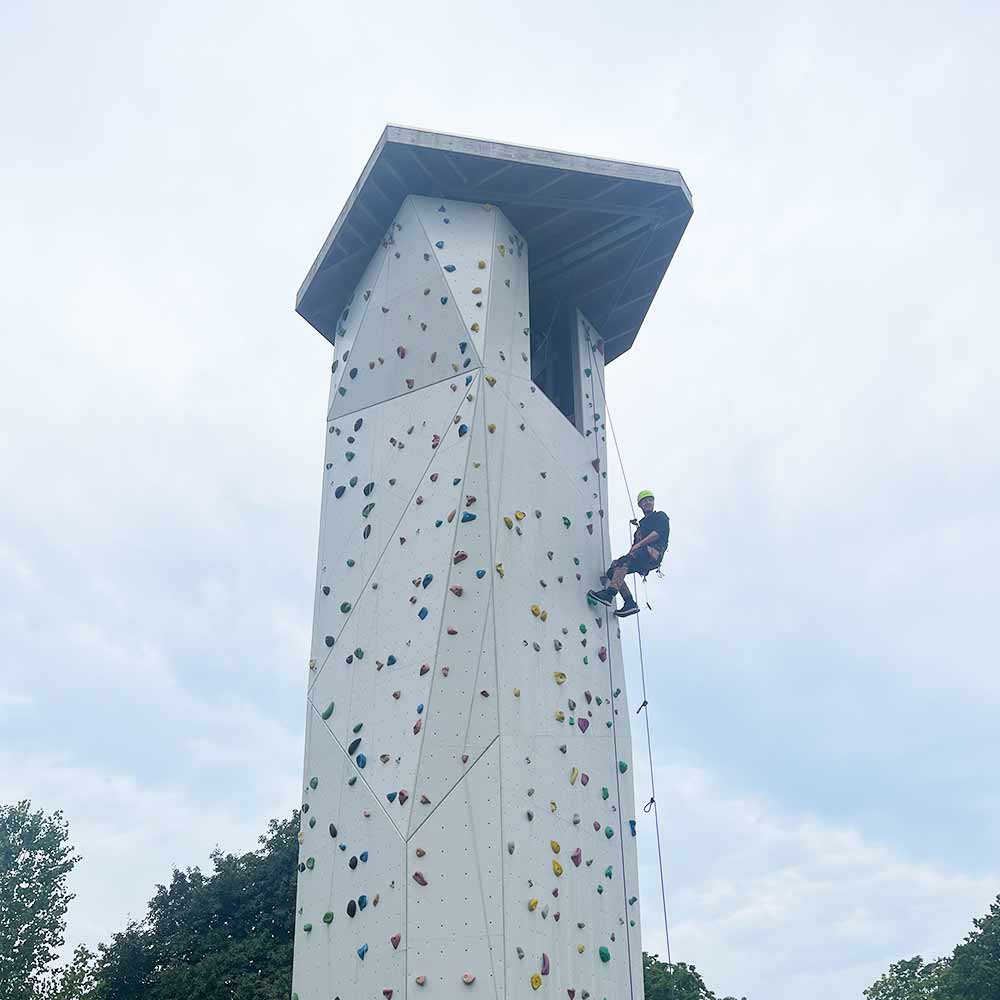
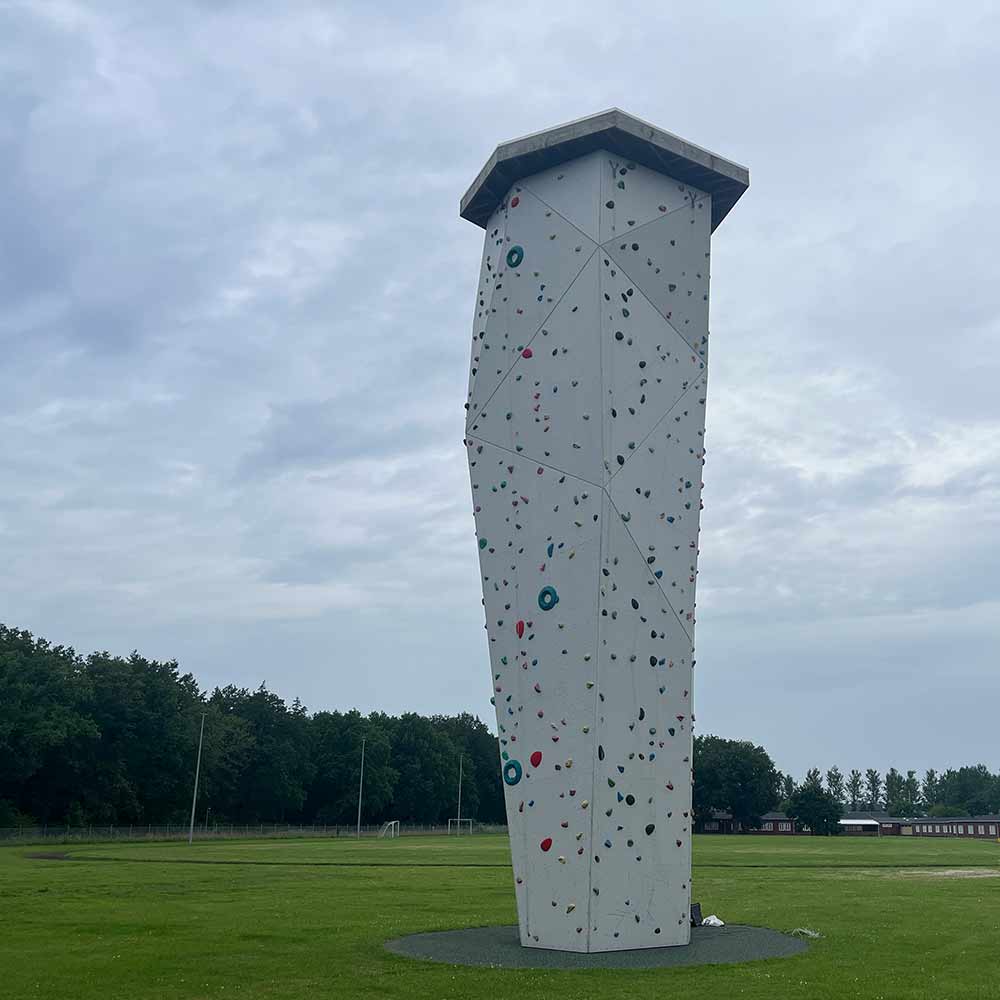
What standards must a climbing tower meet?
DS/EN 12572-1:2017 Artificial climbing walls - Part 1: Safety requirements and test methods for artificial climbing walls with protection points.
This standard specifies the safety requirements and test methods for artificial climbing structures/climbing walls with protection points. The standard applies to artificial climbing walls with protection points in normal use for sport climbing. It does not apply to ice climbing, dry tooling and playground equipment.
DS/EN 12572-1:2017 can be purchased here.
If you need professional advice in connection with the design, development and construction of climbing walls, contact us here.

CLIMBING WALL SERVICES
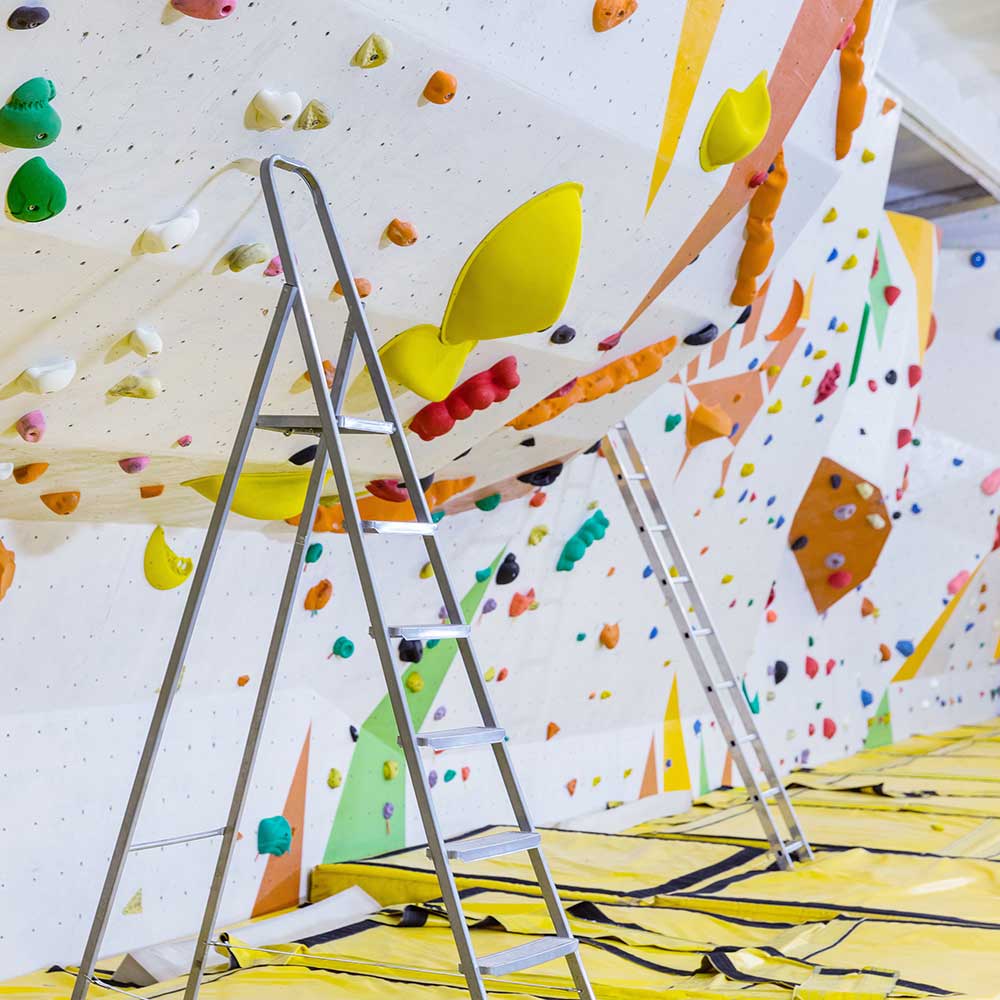
Climbing is more than just a sport – it’s a passion. We help you keep your climbing facilities in peak condition, ensuring they continue to inspire and challenge climbers of all levels. Our services include full inspections of climbing walls and boulders, pull tests, and structural calculations. We help you make sure your facility complies with DS/EN 12572 standards and offer expert guidance to help you get the most out of your wall. With professional route setting, we create exciting climbing experiences that motivate and develop climbers – from first-time ascents to the toughest challenges.
Design & Project Partner
Professional assistance throughout the project - from fledgling ideas to an enjoyable climbing facility.
Annual Service Inspection
Keep your climbing facility and security devices in the best condition with an inspection from our experts.
Get a Quote
We work with specializes high-end brands and are your go-to supplier for all things climbing!
Customer Service
Reach out Monday to Friday at 8am to 4pm at +45 4012 4263 or email us at any time at info@gubbies.com